
Last month, Berkadia Senior Director Melissa Koppel joined more than 2,000 industry peers at the nation’s leading Affordable Housing conference, AHF Live. Melissa spoke on the panel, “Choose the Best Bond Financing Strategy in an Unpredictable Market,” where she shared trends and insights on the financing structures that are most successful in today’s landscape. In the ever-evolving landscape of real estate, finding the right financing structure is crucial. Given today’s dynamic environment, it’s clear that a one-size-fits-all approach doesn’t suffice. Instead, a multitude of financing options are available, each tailored to the unique needs of individual projects.
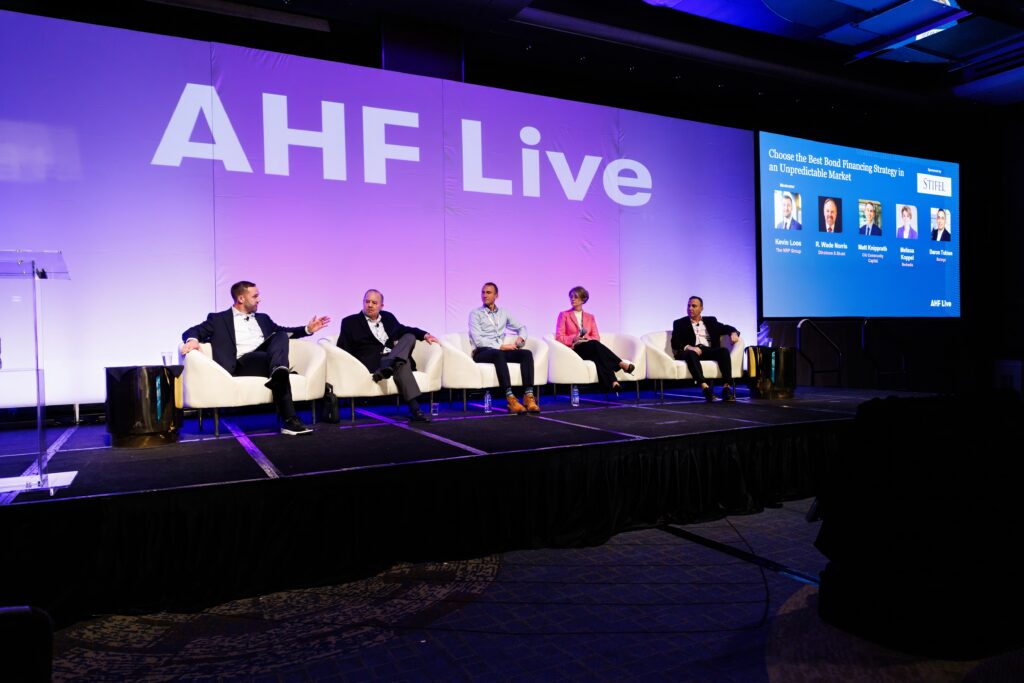
The panel started with an overview of the types of financing structures that have worked well in today’s environment. The panelists tackled Cash-Collateralized Forwards, Housing Authority Credit Enhancements, GSEs, and Private Placement as being useful vehicles that have worked well in the last 12 months of transactions. Melissa provided insight on the success that Berkadia has had with a number of private placement transactions she’s been involved in so far this year. This type of transaction typically offers more flexible terms and quicker execution, which makes it suitable for complex or time-sensitive projects.
The panel then moved on to discuss the One Big Beautiful Bill Act, and its profound impact on Affordable housing. Notably, the 25% Test changes have had significant impacts on affordable housing finance, particularly in how states and jurisdictions are adapting. Some states are actively embracing the changes to the 25% Test, seeing it as an opportunity to increase the volume of affordable housing projects. These states may adjust their policies to accommodate more projects, especially in volume cap-constrained areas. Other states may be slower to adapt, possibly due to administrative challenges or differing priorities in housing policy. Jurisdictions with volume cap constraints might see an increase in deals as developers seek to maximize available resources. Developers may explore borrowing through potentially taxable short-term and long-term options to navigate these constraints.
In volume cap-constrained states, developers are exploring various strategies to close deals and navigate limitations. Some effective alternatives that the panel discusses include Essential Function Bonds, issued for projects deemed essential, such as public infrastructure or facilities. They can bypass volume cap constraints, providing a viable financing option and 501(c)(3) Bonds, which can be used by nonprofit organizations through the issuance of tax-exempt bonds for projects that serve a charitable purpose, such as affordable housing. This structure can help access tax-exempt financing without using volume cap allocations.
The key takeaway is that financing should be as unique as the project itself. By understanding the specific needs and challenges of a development, stakeholders can choose the most appropriate financing structure. This approach not only optimizes financial outcomes but also aligns with strategic goals. In today’s market, flexibility and adaptability are paramount. By exploring a range of financing options, developers can ensure their projects are well-positioned for success. Whether through traditional loans or innovative partnerships, the right structure can make all the difference.
Visit our Affordable Housing page to access exclusive insights, current opportunities, and expert guidance. Discover how our platform can elevate your investment approach.