The Fed raised rates in September, but the more consequential message may be that Warsh is less interested in where policy sits relative to neutral than in whether financial conditions are actually doing the job.
- The Fed delivered the expected 25 bp hike and a dot plot that points toward additional tightening.
- Growth forecasts moved higher, unemployment forecasts moved lower, and inflation forecasts remained above target.
- The bigger takeaway may be that Warsh appears focused on financial conditions rather than traditional estimates of the neutral rate.
Markets came into September focused on whether the Fed would raise rates. By the end of the press conference, a more interesting question had emerged: does Warsh care where neutral is?
For most of the last two decades, investors have relied on the concept of the neutral rate as a shorthand for understanding monetary policy. If fed funds sits above neutral, policy is restrictive. If it sits below neutral, policy is accommodative. While financial conditions are not the same thing as the stance of monetary policy, the neutral-rate framework is useful because it provides a reference point for judging whether the Fed is leaning against growth or supporting it. The problem is that neutral cannot actually be observed. It can only be estimated.
When asked where rates sit relative to neutral, Warsh effectively dismissed the concept as useful academically but of limited operational value. Instead, he returned to a theme that has been present throughout his first few months as Chair: financial conditions matter more than any model’s estimate of equilibrium.
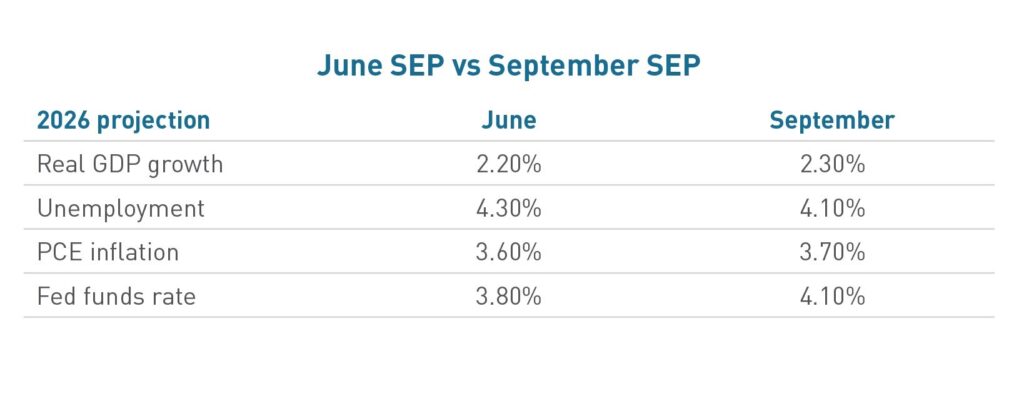
The Fed raised rates by 25 basis points and delivered a more hawkish dot plot than most investors expected. Growth forecasts moved higher. Unemployment forecasts moved lower. Inflation forecasts edged higher. This was not a committee preparing markets for economic weakness. It was a committee looking at a stronger-than-expected economy and concluding that policy may need to move higher still. Once again, Warsh declined to publish his own dot, reinforcing a broader theme that has emerged throughout his tenure: less false precision, less forward guidance, and greater emphasis on how the economy is responding to financial conditions than on estimates of where rates should eventually settle.
Policymakers also appear uncomfortable describing financial conditions as restrictive. Warsh noted that the Committee had removed “a dose of accommodation” and reiterated that members were hard-pressed to characterize current conditions as genuinely restrictive. That is a very different framework than simply asking whether fed funds is above neutral.
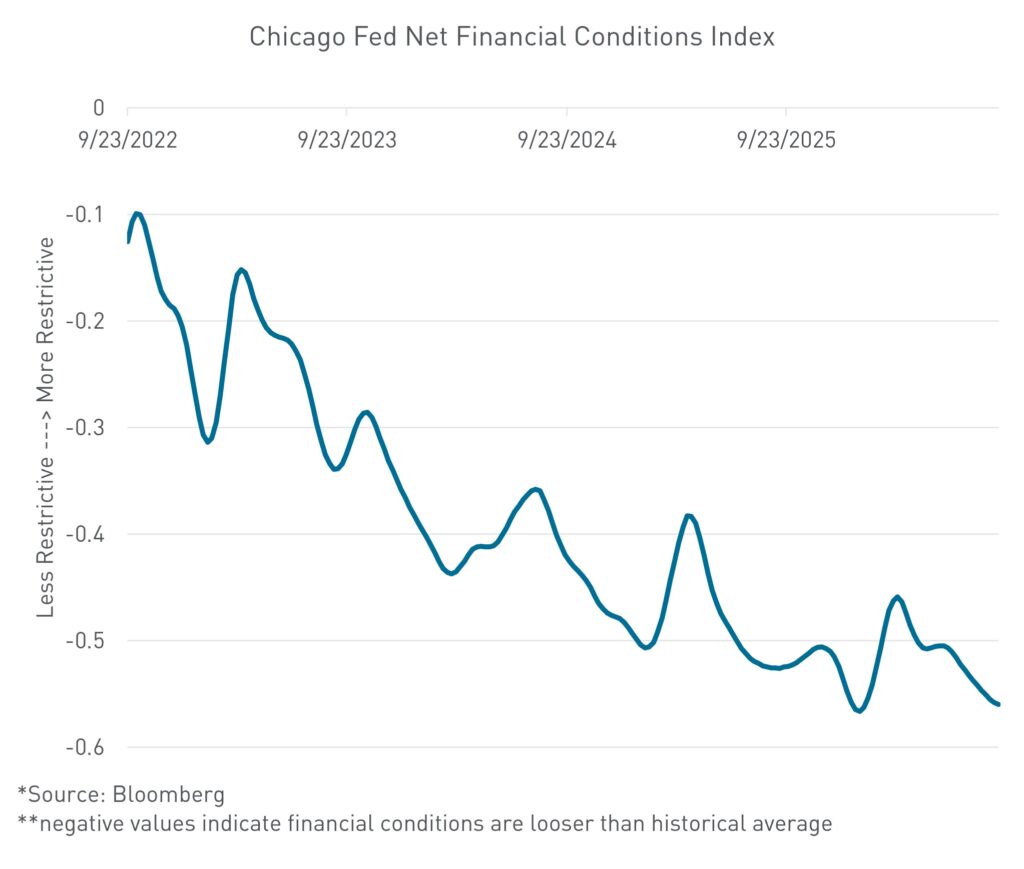
A policy rate can exceed neutral on paper while financial conditions remain relatively easy in practice. Equity markets can remain elevated. Capital spending can remain robust, credit can remain available, and consumers can continue spending. If those conditions persist, the economy may be experiencing less restraint than the level of fed funds alone would suggest. That appears to be the Fed’s concern today.
The market spent much of the summer tightening financial conditions for the Fed. Treasury yields moved higher, mortgage rates moved higher, and real yields climbed as investors increasingly priced a more hawkish Warsh Fed. In effect, markets were doing some of the Fed’s work by making capital more expensive before policymakers ever changed the fed funds rate. By September, the dynamic had reversed. The economy remained strong enough, spending resilient enough, and inflation persistent enough that the Fed ultimately tightened for the market.
Commercial real estate borrowers do not finance at the fed funds rate. They finance at Treasury yields, swap rates, credit spreads, and lender appetite. The Fed can move the overnight rate, but it cannot dictate where the 10-year Treasury trades, what spread a lender demands, or how much risk a bank or insurance company is willing to put on its balance sheet. For borrowers, those transmission channels ultimately determine the availability and cost of capital.
That makes the debate over neutral somewhat less important for commercial real estate than the debate over what is actually happening in financial markets. If Warsh’s Fed is increasingly willing to judge policy by its effect rather than its position relative to an estimated equilibrium rate, investors may need to do the same. A lower fed funds rate does not automatically mean easier financial conditions. A higher fed funds rate does not automatically mean the economy is being sufficiently restrained. The more relevant signal is whether the cost and availability of capital are actually changing behavior. For commercial real estate, that is where monetary policy ultimately becomes real.
This commentary and any statements, information, data and content contained therein, and any materials, information, images, links, sounds, graphics or video provided in conjunction with this document (collectively “Materials”) has been prepared for informational purposes or general guidance on matters of interest only, and does not constitute professional advice, advertising or a solicitation. The Materials are of a general nature and not intended to address the circumstances of any particular individual or entity. You should not act upon the information contained in the Materials without obtaining specific professional advice. As such, nothing herein constitutes legal, financial, business, investment or tax advice and you should consult your own legal, financial, tax, investment or other professional advisor(s) before engaging in any activity in connection herewith. The information in the Materials is not a substitute for a thorough due diligence investigation. No representation or warranty (express or implied) is given as to the accuracy or completeness of the information contained in the Materials, and, to the extent permitted by law, Berkadia Commercial Mortgage LLC ( together with its affiliates, the “Company”) neither accept nor assume any liability, responsibility or duty of care for any consequences of you or anyone else acting, or refraining to act, in reliance on the Materials or for any decision based on them. No part of the Materials is to be copied, reproduced, distributed or disseminated in any way without the prior written consent of the Company.